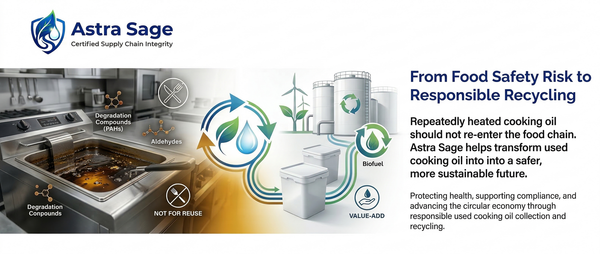
5 Smart Tips for Restaurants & Food Businesses Selling Their Used Cooking Oil
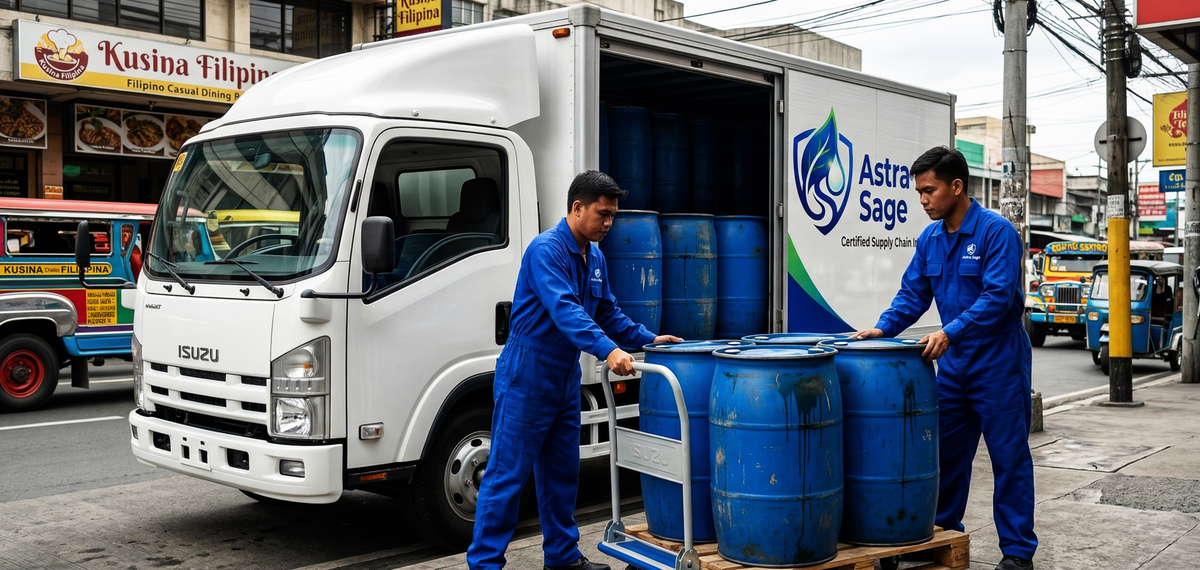
If you run a restaurant, catering service, or food stall in the Philippines, your kitchen produces something more valuable than you might think — used cooking oil. Rather than paying to have it hauled away or, worse, pouring it down the drain, partnering with a trusted UCO buyer like Astra Sage can turn waste into revenue while helping the environment. Here are five practical tips to get the most out of every liter.

Stop Pouring It Down the Drain — It's Hazardous Waste, and the Penalties Are Steep
Many food business owners in the Philippines are unaware that used cooking oil is officially classified as hazardous waste under Republic Act 6969 (the Toxic Substances and Hazardous and Nuclear Wastes Control Act of 1990). The Department of Environment and Natural Resources (DENR), through its Environmental Management Bureau (EMB), oversees the proper handling, storage, transport, and disposal of UCO. Improper disposal — pouring it into sinks, drains, or open land — can lead to clogged sewer systems, water contamination, and serious legal consequences.
Here's what you're risking if you don't comply:
Administrative Fines: Under Section 15 of RA 6969, the DENR Secretary can impose administrative fines of not less than ₱10,000 and up to ₱50,000 for each violation — including improper storage, transport, or disposal of hazardous waste like UCO.
Criminal Penalties: Section 14 of the same law prescribes imprisonment of 6 months and 1 day to 6 years and 1 day, plus a fine ranging from ₱600 to ₱4,000 for individuals who knowingly violate hazardous waste regulations. If the offender is a corporation or business entity, the partner, president, director, or manager who consented to or tolerated the violation is held directly and personally liable as a co-principal.
Forfeiture & Confiscation: Vehicles, equipment, and facilities used in illegal transport or disposal of hazardous waste can be confiscated and forfeited in favor of the government.
Beyond national law, local government units (LGUs) are also tightening enforcement. Cities like Davao and Bacolod have enacted their own ordinances requiring all restaurants, food stalls, and commercial kitchens to register their UCO disposal activities and work only with DENR-accredited collectors and transporters.
The bottom line? Selling your UCO to an authorized and accredited buyer like Astra Sage is not just smart business — it protects you from fines, criminal liability, and the risk of having your operations shut down.
Store Your UCO Properly to Maximize Its Value
The quality of your used cooking oil directly affects the price a buyer will pay for it. Oil that's been contaminated with water, food debris, or cleaning chemicals loses its value quickly. Here's how to keep it clean and sellable:
Always let oil cool completely before transferring it to a storage container. Use a dedicated, sealed drum or tank — never an open bucket exposed to rain or dust. Filter out large food particles with a basic mesh strainer before storage. Keep the storage container in a covered, dry area away from direct sunlight. The cleaner and drier your UCO, the higher the price you'll receive from buyers like Astra Sage.
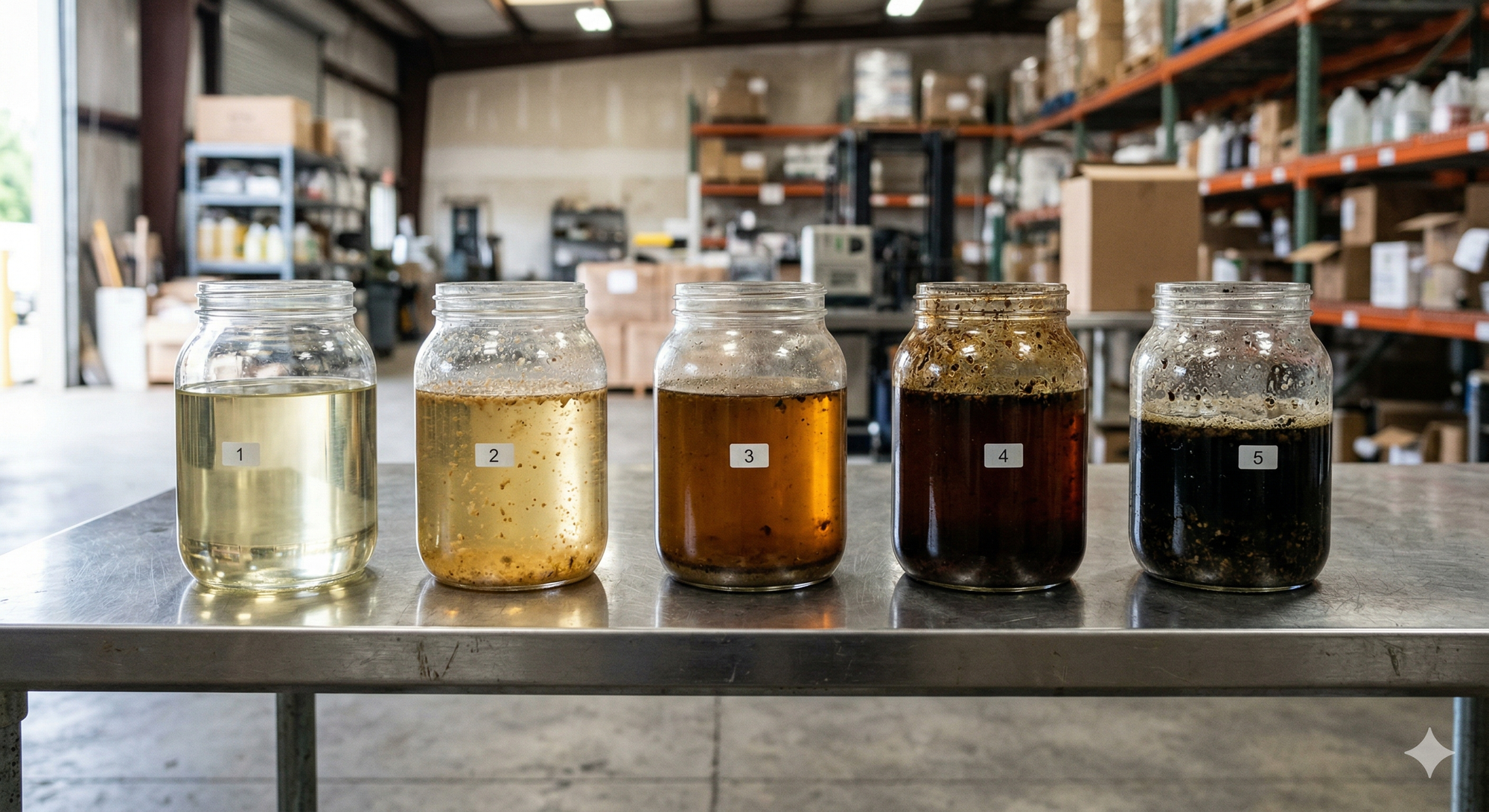
Know When to Replace Your Frying Oil
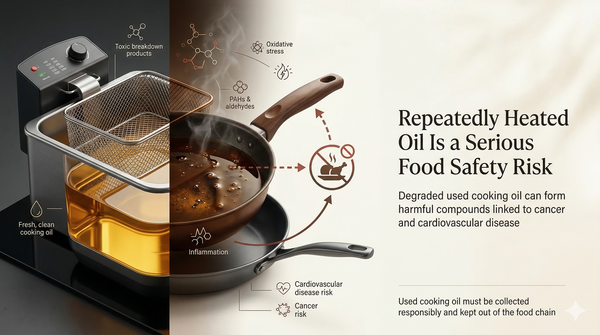
Holding on to frying oil for too long doesn't just affect food quality — it also reduces the recyclability of the oil when you finally dispose of it. Oil that has been overused becomes excessively dark, produces heavy smoke at lower temperatures, and develops a rancid smell. These are signs that the oil's chemical structure has degraded beyond the point of easy recycling.
A good rule of thumb: replace your frying oil after every two to three days of heavy use, or sooner if you notice any of the warning signs above. This keeps your food tasting great and ensures your UCO remains a high-quality feedstock that buyers actively want.
Did you know? The Philippines generates an estimated 300 million liters of used cooking oil annually from households, restaurants, and food manufacturers. Much of this is still disposed of improperly — which means there's enormous untapped potential for food businesses to earn from what they're currently throwing away.
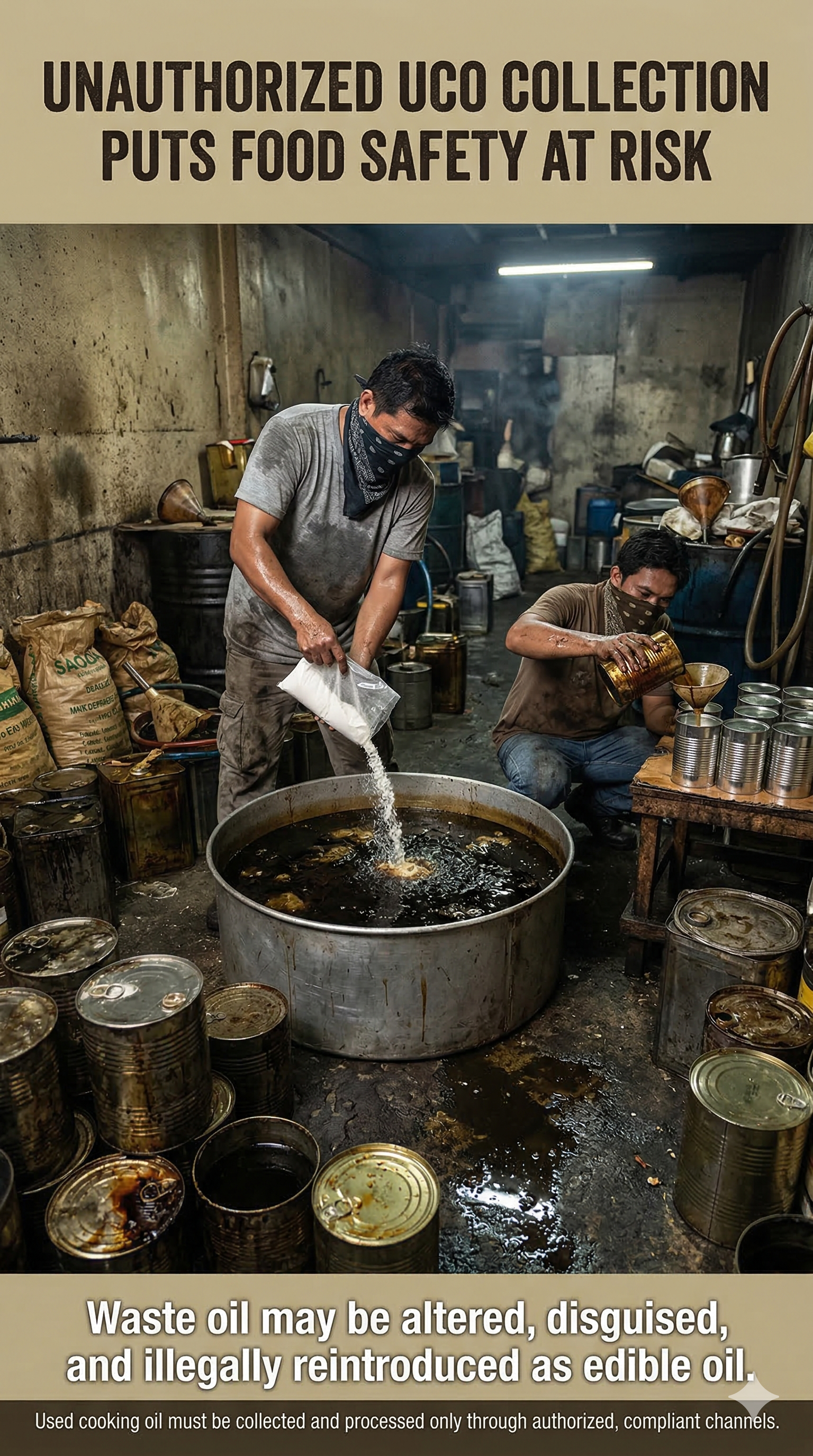
Choose a Buyer You Can Trust — Or Your Own Oil Might End Up Back on Your Plate
Not all UCO collectors are created equal — and some are outright dangerous. A disturbing practice exists in the Philippines and across Southeast Asia: illegal collectors purchase used cooking oil, then decolorize and deodorize it using chemical treatments to make it look and smell like fresh oil. They then repackage and sell this "recycled" oil back into the market — meaning your own used cooking oil could end up right back in your kitchen.
Here's the alarming truth: while decolorizing and deodorizing can make UCO appear clean on the surface, the harmful compounds remain. Free fatty acids (FFAs), polar compounds, trans fats, and other degradation by-products that formed during repeated high-temperature frying are not removed by cosmetic processing. When this chemically disguised oil is reused for cooking, it degrades your food quality, introduces harmful substances into your dishes, and puts the health of your customers at serious risk. Your reputation as a food business is directly on the line.
This is why choosing the right UCO buyer matters more than just the price per liter. When you sell to an unaccredited or illegal collector, you have zero visibility into where your oil ends up — and you may unknowingly be feeding a cycle that harms the very customers you serve.
When choosing a UCO buyer, look for: a company that is SEC-registered and DENR-EMB accredited, transparent pricing per liter or per kilogram, a reliable and consistent collection schedule, proper documentation and manifests for every pickup, and a clear chain of custody showing where the oil goes after collection.
Astra Sage Incorporation checks every one of these boxes. We are an authorized, approved collector and exporter of UCO. Every liter we purchase is tracked, documented, and channeled strictly toward industrial and export markets — never back into the food chain. When you partner with Astra Sage, you have our guarantee that your UCO is handled responsibly, legally, and ethically.
Astra Sage Is Your Authorized, Approved UCO Collector — We Guarantee It Never Returns to the Food Chain
At Astra Sage Incorporation, we are an authorized and approved collector and exporter of used cooking oil in the Philippines. Our operations are fully compliant with DENR regulations, and we maintain complete documentation and traceability for every liter we collect.
Our commitment is absolute: the UCO we purchase from your business will never re-enter the food chain. We strictly channel all collected used cooking oil toward legitimate industrial applications. This protects your customers, your reputation, and the environment.
Here are all the industrial uses for UCO that Astra Sage supports through its export and supply network:
✓Biodiesel Production — Converted into fatty acid methyl ester (FAME), a renewable diesel alternative that powers vehicles and heavy machinery
✓Sustainable Aviation Fuel (SAF) — Refined through hydrotreatment into jet fuel that can reduce flight emissions by up to 80%
✓Renewable Diesel (HVO) — Hydroprocessed vegetable oil used as a drop-in replacement for fossil diesel in trucks and buses
✓Industrial Soap & Detergent Manufacturing — UCO is saponified to produce industrial-grade cleaning products✓Animal Feed Ingredients — Processed into fat supplements for livestock and poultry feed formulations
✓Industrial Lubricants & Greases — Refined into bio-based lubricants for machinery and equipment
✓Oleochemicals — Serves as feedstock for fatty acids, glycerin, and other chemical intermediates used in cosmetics, pharmaceuticals, and plastics
✓Bio-Naphtha — A by-product of HVO refining, used as a renewable feedstock in petrochemical and plastics manufacturing
✓Paints, Coatings & Varnishes — UCO derivatives are used in alkyd resins for weather-proofing and surface coatings
✓Biogas & Energy Generation — Processed through anaerobic digestion to generate methane for electricity and heat
When you sell your UCO to Astra Sage, you're not just disposing of waste — you're supplying a globally sought-after raw material that fuels entire industries. And you can do so with full confidence that none of it will ever be decolorized, repackaged, or sold back as cooking oil. That's the Astra Sage guarantee.
Ready to Turn Your Waste Oil Into Revenue?
Astra Sage Incorporation makes it simple. We handle the logistics — from collection scheduling to proper documentation — so you can focus on what you do best: running your kitchen. Whether you operate a single restaurant or a chain of food outlets, we offer competitive pricing and dependable service across the Philippines.
Partner With Astra Sage Today
Get a free consultation and find out how much your used cooking oil is worth. We'll set up a collection schedule that fits your operations — no hassle, no hidden fees.
Used Cooking Oil, Sustainability, Philippines, Biodiesel, Restaurant Tips